

This guide walks through everything you need to master design project management: clear definitions, the proven 7-step process, methodology selection, essential tools, and battle-tested best practices that protect both creative excellence and business outcomes.
TLDR: Key Takeaways
- Structured planning meets creative work through frameworks that respect non-linear design processes
- Seven-step framework spans goal definition through execution and post-project review
- Match methodology to project type: Agile for digital, Waterfall for fixed-scope, Kanban for ongoing work
- Protected focus time and structured feedback cycles prevent costly revisions and client misalignment
- Effective management cuts the 45% scope creep rate that drives 15% budget overruns and 12-week delays
What is Design Project Management?
Design project management is the discipline of applying structured planning, coordination, and control processes specifically to creative work—including graphic design, interior design, product design, UX/UI design, and branding projects. According to AIGA, it exists where "the freedom of the creative process and the constraints of sound business procedures overlap."
Unlike traditional project management, design PM must handle subjective deliverables, non-linear creative processes, and multiple revision cycles.
The work is improvisational and iterative rather than sequential. This requires flexibility that engineering-focused methodologies don't provide.
Core components:
- Scope definition with clear deliverables and revision limits
- Creative brief development that aligns stakeholders on objectives
- Timeline management that accounts for creative thinking time
- Budget control balancing creative exploration with financial constraints
- Quality assurance for deliverables meeting aesthetic and functional standards

Types of Design Projects
Design project management approaches vary significantly by project type:
Common project categories:
- Brand identity development
- Website and digital product design
- Interior design for residential and commercial spaces
- Product design and packaging
- Marketing collateral and print design
- User experience (UX) and interface (UI) design
Physical projects like interior design demand procurement coordination and installation logistics. Digital projects emphasize iterative testing and technical implementation.
Client-facing projects involve more stakeholder complexity than internal work. One-time projects need different workflows than ongoing engagements.
The Role of a Design Project Manager
Design project managers bridge the gap between creative teams and business stakeholders.
Core responsibilities:
- Translating client needs into actionable creative briefs
- Coordinating between designers, clients, and vendors
- Managing timelines, budgets, and resource allocation
- Facilitating structured feedback loops that protect creative time
- Ensuring design quality while meeting business constraints
Success requires both creative fluency and business acumen:
Essential skills:
- Understanding of design principles and terminology
- Strong communication abilities with both creative and business stakeholders
- Ability to manage creative personalities without stifling innovation
- Proficiency with project management and collaboration tools
- Conflict resolution when stakeholder opinions diverge
Interior design studios often distribute these responsibilities across specialized roles. The founder typically provides strategic leadership, a senior designer oversees creative direction, and an operations director manages project logistics and client coordination.
Why Design Project Management Matters
Preventing Common Project Failures
Research shows that 45% of projects experience scope creep, resulting in an average 15% budget overrun and 12-week delays.
Design projects are particularly vulnerable because subjective feedback can trigger endless revision cycles.
Proper project management prevents these failures by:
- Establishing clear scope boundaries with defined deliverables
- Setting realistic timelines that account for creative processes
- Building structured approval gates to prevent scope expansion
- Maintaining transparent communication about progress and constraints
Enhancing Creative Quality
Structure enhances creativity when applied thoughtfully. Clear parameters enable better design by:
- Constraints force creative problem-solving within defined boundaries
- Protecting deep work—information workers face over four interruptions per hour, making structured time blocks essential for creative flow
- Chaos drains creative energy; organized processes free designers to focus on craft
- Proper planning builds in time for exploration and refinement
Building Stronger Client Relationships
These internal quality improvements translate directly to better client experiences. Structured management improves client satisfaction in several key ways:
- Clear expectation setting from project start
- Regular communication about progress and timelines
- Professional presentation of work with context and rationale
- Transparency when challenges arise
- Consistent delivery that builds trust and generates repeat business
Supporting Team Morale
Beyond client relationships, effective project management creates a healthier work environment. Teams perform at their best when they have:
- Clear direction that reduces confusion and rework
- Proper resource allocation that prevents burnout from unrealistic timelines
- Milestone celebrations that maintain motivation throughout long projects
- Successful delivery that builds team confidence and professional pride
Driving Business Outcomes
Organizations with high project management maturity complete 67% of projects within budget, compared to only 46% for low-maturity organizations. The financial impact extends across multiple areas:
- Improved profitability through efficient resource use
- Capacity to take on more projects with better planning
- Enhanced reputation from consistent, quality delivery
- Data-driven insights for accurate future project estimation
The 7 Steps in the Design Process
This framework provides a roadmap from initial concept to final delivery, ensuring nothing falls through the cracks while maintaining creative excellence.
Step 1: Define Project Goals and Objectives
Start by establishing clear, measurable goals that align client business objectives with creative vision.
Conduct effective discovery sessions by asking:
- What business problem does this design solve?
- Who is the target audience and what are their needs?
- What does success look like, and how will we measure it?
- What brand guidelines, competitive landscape, or constraints must we consider?
- What are the project's non-negotiable requirements vs. nice-to-haves?
The output should be a comprehensive creative brief that serves as the project's north star, aligning all stakeholders before design work begins.
Step 2: Identify and Align Stakeholders
Successful projects depend on understanding who influences decisions and outcomes. Map everyone who will influence or be impacted by the design:
- Decision-makers with approval authority
- End users who will interact with the design
- Internal team members contributing to execution
- Vendors and contractors handling production or installation
- Influencers who may not have formal authority but impact decisions
Use a Power-Interest Grid (Mendelow's Matrix) to categorize stakeholders. High-power, high-interest stakeholders (like CEOs championing a redesign) require close management to prevent bottlenecks.
Establish upfront:
- Communication protocols and preferred channels
- Decision-making authority and approval workflows
- Feedback processes and consolidation methods
- Response time expectations
Step 3: Establish Project Scope and Deliverables
Create a detailed scope document specifying exactly what will be delivered:
- Number of initial concepts presented
- Revision rounds included (industry standard is 1-3 rounds for graphic design)
- File formats and asset types provided
- Out-of-scope items explicitly listed
- Any services not included (like copywriting or photography)
Get written approval on scope before starting design work. This documentation protects against scope creep and provides reference when questions arise.
For interior design projects, scope documents should also specify procurement responsibilities, installation coordination, and post-installation services. Field Flower Collective in St. Johns County, Florida structures scopes around dedicated installation days to ensure comprehensive quality control rather than fragmented delivery.
Step 4: Create Realistic Timelines and Milestones
Creative work doesn't follow assembly-line timelines. Build project schedules that account for the realities of design thinking:
- Creative thinking time for exploration and concept development
- Internal reviews before client presentations
- Client feedback cycles with realistic response windows
- Revision rounds based on scope agreement
- Production time for physical deliverables or technical implementation
- Buffer periods for unexpected delays (usually 10-15%)
Break projects into phases:
- Discovery: Research, stakeholder interviews, brief development
- Concepting: Brainstorming, initial design explorations
- Design Development: Refining chosen direction
- Refinement: Incorporating feedback, finalizing details
- Finalization: Production preparation, technical specifications, handoff
Each phase should have clear deliverables and review points to maintain momentum and prevent surprises.

Step 5: Allocate Resources and Set Budget
Resource planning includes:
- Team members needed and their specific skills
- Availability and capacity of internal resources
- External vendors or contractors required
- Tools, software, materials, or equipment needed
- Contingency resources for unexpected challenges
Budget development should specify:
- Estimated hours per task and phase
- Labor costs for internal team and contractors
- Materials, software licenses, stock assets
- Contingency buffer (typically 10-20% depending on project complexity)
- Payment schedule tied to milestone completion
Present budget breakdowns to clients for approval before work begins, and establish a formal change request process for scope additions that impact cost.
Step 6: Manage Project Execution and Communication
The execution phase requires active coordination and communication.
Essential activities include:
- Kickoff meetings to align team and stakeholders
- Regular check-ins (weekly for most projects) to track progress
- Milestone reviews at each phase completion
- Feedback management using structured review processes
- Status updates keeping all stakeholders informed
- Issue resolution when challenges arise
Common execution challenges and solutions:
| Challenge | Solution |
|---|---|
| Design direction changes mid-project | Evaluate impact on timeline/budget; issue change order if scope affected |
| Delayed client feedback | Build feedback deadlines into timeline; escalate when delays risk delivery |
| Resource conflicts | Maintain resource calendar; communicate capacity constraints early |
| Technical constraints discovered late | Include technical review in early phases; involve developers in concepting |
| Conflicting stakeholder opinions | Consolidate feedback; present unified direction based on project goals |
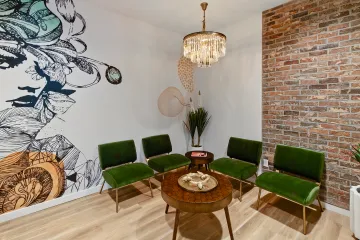
One execution strategy that minimizes these challenges: dedicated installation days. Field Flower Collective uses this approach rather than piecemeal delivery, ensuring comprehensive quality control and cohesive final results.
Step 7: Conduct Post-Project Review and Documentation
Project wrap-up includes:
- Final deliverable handoff with all agreed-upon assets
- Client sign-off confirming completion
- Team retrospective to discuss what worked and what didn't
- Documentation of lessons learned for future projects
- Project file archiving for future reference
- Celebration of team success
Gather insights for continuous improvement:
- How accurate were time and budget estimates?
- What process improvements should we implement?
- Where did communication break down or excel?
- What client feedback can inform future work?
- Which tools or methods proved most effective?
For interior design work, this includes a final walkthrough with a punch list to identify and resolve any remaining details before final payment.
Design Project Management Methodologies
Different methodologies suit different project types, and many successful teams use hybrid approaches that combine elements from multiple frameworks to match their specific needs.
Agile and Scrum for Design
Agile emphasizes iterative development with short cycles called sprints, incorporating regular feedback and flexibility to adapt based on learnings. This approach works particularly well for design teams that need to respond quickly to changing requirements.
How it works for design:
- Sprints (typically 1-2 weeks) deliver working design increments
- Daily standups keep team aligned on progress and blockers
- Sprint reviews gather stakeholder feedback on completed work
- Retrospectives continuously improve team processes
Best for:
- Digital products and UX/UI projects
- Projects with evolving requirements
- Ongoing design work with continuous delivery
- Situations where rapid iteration adds value
Proven results: Adobe's transition to Agile resulted in 23% annual revenue growth and 90% improvement in customer satisfaction.
Waterfall for Linear Design Projects
Waterfall follows sequential phases where teams must complete each stage before the next begins. This methodology relies on comprehensive upfront planning and formal approval gates at each milestone.
Best for:
- Projects with fixed, well-understood requirements
- Physical design projects (interior design, product design, print)
- Regulated industries requiring extensive documentation
- Clients who prefer seeing complete concepts rather than iterative drafts
- Projects where changes are costly once production begins
Note: Less suitable for digital work where user feedback often requires scope changes.
Kanban for Ongoing Design Work
Kanban visualizes workflow on boards and limits work in progress to maintain continuous flow rather than fixed sprints. This approach provides flexibility for teams handling multiple concurrent projects.
How it works:
- Visual board with columns representing workflow stages (To Do, In Progress, Review, Done)
- Work-in-progress (WIP) limits prevent bottlenecks
- New work pulled into the system as capacity allows
- Flexibility to prioritize urgent requests
Ideal for:
- Design teams handling multiple small projects simultaneously
- Ongoing marketing design requests
- Maintenance and updates to existing designs
- Teams supporting other departments with ad-hoc design needs

Essential Tools for Design Project Success
Successful design project management requires integrated tools for planning, collaboration, feedback, and communication.
Project Management and Collaboration Software
Key features to prioritize:
- Task management with dependencies and assignments
- Timeline/Gantt chart views for schedule visualization
- Resource allocation and capacity planning
- File sharing with version control
- Client portals for feedback and approvals
- Time tracking for accurate billing and estimation
- Integration with design tools
Popular options include:
- Asana: Flexible views (list, board, timeline) with strong task management
- Monday.com: Visual, customizable workflows; 82% of companies use PM software to drive efficiency
- Teamwork: Built specifically for client work with profitability tracking
- Trello: Simple Kanban boards for straightforward projects
Choose based on team size, project complexity, budget, and required integrations.
Design-Specific Tools and Proofing Platforms
While general project management tools handle tasks and timelines, design work needs specialized review platforms. Centralized design review eliminates email chaos and maintains visual context for feedback.
Essential capabilities:
- Markup and commenting directly on design files
- Version history tracking all iterations
- Approval workflows with sign-off documentation
- Reduced back-and-forth through clear, pinned feedback
- Integration with design tools (Figma, Adobe CC, Sketch)
Proven platforms:
- Frame.io: Reduces review rounds by 27%, turnarounds by 31%, and revisions by 25%
- PageProof: Seamless integration with Adobe CC, Figma, and Canva
- Figma: Real-time collaboration built into the design tool itself; 77% of designers with high job satisfaction use collaborative tools frequently
Automated notifications when designs update keep stakeholders informed without manual status updates.
Communication and Documentation Tools
Essential foundation:
- Video conferencing (Zoom, Google Meet) for client presentations and team meetings
- Instant messaging (Slack, Microsoft Teams) for quick questions without email clutter
- Shared documentation (Google Docs, Notion) for creative briefs, style guides, meeting notes
- Knowledge bases (Confluence, Notion) for design standards, processes, templates
Centralized documentation provides:
- Single source of truth for project requirements
- Decision history with rationale
- Approved designs and specifications at each milestone
- Reduced time searching for information across email threads
Best Practices for Managing Design Projects Successfully
Beyond following steps and using tools, these proven practices help navigate the unique challenges of managing creative work.
Protect Creative Time and Minimize Interruptions
Designers need uninterrupted blocks for deep work. Constant meetings or interruptions fragment attention and reduce creative output quality.
Strategies to implement:
- Batch meetings on specific days, leaving other days meeting-free
- Establish 2-4 hour focus blocks where designers aren't expected to respond immediately
- Use asynchronous communication rather than requiring real-time responses
- Respect that design thinking isn't linear and requires thinking time
Given that 40% of disrupted tasks aren't resumed immediately, protecting continuous work time directly impacts project quality and efficiency.
Build in Structured Feedback and Revision Cycles
Set expectations upfront:
- Number of revision rounds included in scope
- Timeline for stakeholder feedback (typically 3-5 business days)
- Process for consolidating feedback from multiple stakeholders
- Criteria for what constitutes a "revision" vs. scope change
Internal review before client presentation:
- Catch obvious issues before external eyes see them
- Ensure alignment with creative brief and project goals
- Prepare context and rationale for design decisions
- Present unified team front to build client confidence
Provide actionable feedback:
- Be specific rather than subjective ("Move logo 10px left" vs. "I don't like it")
- Explain the reasoning behind feedback to help designers understand intent
- Use design terminology appropriately or ask questions when unsure
- Consolidate conflicting stakeholder opinions before presenting to designers
Balance Structure with Creative Freedom
Too much process stifles innovation; too little creates chaos.
Finding the right balance:
- Clear parameters enable creativity—constraints force innovative problem-solving
- Involve designers in planning; their input on timelines improves buy-in
- Be flexible when exploration reveals better directions
- Know when to follow process vs. adapt—rigid adherence can miss opportunities
This philosophy mirrors how Field Flower Collective operates. Their commitment to creating "flexible employment" recognizes that creative work doesn't always fit rigid schedules, allowing designers to do their best work.
Maintain Clear Documentation Throughout the Project
Document these critical elements:
- Initial creative brief and client requirements
- Design decisions and reasoning behind them
- Feedback received and how it was addressed
- Approved designs at each milestone
- Scope changes with impact on timeline/budget
- Final deliverables and technical specifications
Benefits of thorough documentation:
- Reduces misunderstandings and disputes
- Enables smooth onboarding if team members change mid-project
- Provides reference when questions arise weeks or months later
- Creates learning library for estimating future projects
- Protects the team if scope or requirements are disputed
For interior design projects, documentation includes procurement logs tracking every item's vendor, cost, lead time, and status. This level of detail is essential for managing the complex logistics of physical installations.
Frequently Asked Questions
What does design project management mean?
Design project management is the practice of applying structured planning, coordination, and control processes to creative projects, ensuring design work is delivered on time, within budget, and meeting quality standards while respecting the creative process.
What are the 7 steps in the design process?
The seven steps are: define goals through discovery, align stakeholders with communication protocols, establish scope with written approval, create timelines with milestones, allocate resources and budget, manage execution with regular updates, and conduct post-project review.
What are the 4 types of project managers?
The four types are technical (methodology and process), strategic (aligning with business goals), operational (day-to-day execution), and creative (managing design teams with understanding of the creative process).
How do you manage scope creep in design projects?
Establish clear scope documentation with specific deliverables and revision limits, get written approval before starting work, and use a formal change request process for any additions. Formal change control processes are essential since 45% of projects experience scope creep.
What's the difference between managing designers and managing other teams?
Designers need uninterrupted creative time for deep work, careful feedback management since design is subjective, and context about the "why" behind requests. The creative process isn't linear, and maintaining morale requires celebrating wins while protecting against excessive criticism.
How can interior design firms improve their project management?
Set clear expectations during onboarding, centralize contractor and vendor communication, document all design decisions and approvals, and build buffer time for procurement delays. Define revisions by concept rather than individual item swaps to prevent cascading rework.