Introduction
Picture yourself standing in an empty room—or worse, a cluttered, dysfunctional space—wondering how it could ever become the beautiful, organized environment you've imagined. You know what you want the space to feel like, but translating that vision into reality feels overwhelming.
Many people assume interior designers simply pick out pretty furniture and suggest paint colors. Professional interior design involves technical expertise, project management, and creative problem-solving that goes far beyond aesthetics.
Designers navigate building codes, coordinate contractors, create detailed floor plans, and manage complex timelines—all while bringing your vision to life. Understanding this full scope—from initial consultation through final installation—helps you determine whether hiring a designer is the right choice for your project.
Key Takeaways
- Combines aesthetics, technical expertise, and project management for functional spaces
- Typical timeline: weeks to months across consultation, design, coordination, and installation
- Unlike decorators, designers manage structural changes and ensure building code compliance
- Prevents costly mistakes and saves time on complex renovations and new construction
What Is Interior Design?
Interior design is the art and science of enhancing interior spaces to create healthier, more functional, and aesthetically pleasing environments. Unlike decoration, which focuses on surface-level aesthetics, interior design encompasses space planning, building code compliance, material selection, and coordination with architects and contractors.
This comprehensive approach requires professional designers to apply principles from visual arts, psychology, and architecture to solve spatial problems. According to the American Society of Interior Designers (ASID), interior design improves the human experience by creating safe, functional, and accessible environments that meet end-user requirements while adhering to codes and regulations.
Interior designers bring specialized expertise that includes:
- Reading and interpreting blueprints and technical drawings
- Understanding building codes and inspection regulations
- Coordinating with architects, contractors, and tradespeople
- Selecting materials that balance aesthetics with safety standards

The Bureau of Labor Statistics confirms these skills require formal education and standardized credentials, not just aesthetic sensibility.
What Interior Designers Actually Do
Interior designers manage the entire project lifecycle, ensuring technical compliance and functional performance while creating beautiful spaces.
Space Planning and Layout
Designers analyze how spaces will be used and create floor plans that optimize traffic flow, functionality, and proportions.
Space planning determines furniture placement, room divisions, and how spaces relate to maximize usability. It ensures rooms meet code requirements for clearances and accessibility while accommodating your lifestyle needs.
Kitchen designs, for example, must follow specific guidelines for work aisles and fixture placement to ensure safety and efficiency.
Concept Development and Design Vision
Designers develop cohesive design concepts based on client preferences, lifestyle needs, and architectural context. The process creates mood boards, color palettes, and material selections that bring the vision to life.
Field Flower Collective takes a personalized approach, discussing not just aesthetics but how families actually live in their spaces. Founder Margo Tomsey's two decades in fashion design inform her sophisticated eye for color, texture, and pattern.
Material and Product Selection
Designers source and specify furniture, fabrics, finishes, lighting, and accessories that align with the design concept and budget. They have access to trade-only resources and can often negotiate better pricing than consumers purchasing retail.
Selection criteria include:
- Durability and maintenance requirements
- Compatibility with existing architecture
- Long-term value beyond initial appearance
- Budget alignment and quality standards
Project Management and Coordination
Designers coordinate with contractors, architects, electricians, plumbers, and other trades to ensure correct execution. They create timelines, manage budgets, and oversee installations.
Field Flower Collective provides comprehensive construction project management and contractor coordination for renovation and new construction projects, scheduling dedicated installation days to execute complete transformations rather than piecemeal installations.
Technical Documentation
Professional designers create detailed drawings, specifications, and construction documents required for permitting and construction. These technical skills require formal training and knowledge of building codes.
Documentation includes floor plans, reflected ceiling plans, elevation drawings, and detailed specifications that communicate design intent to contractors and ensure regulatory compliance.
Interior Designer vs Interior Decorator
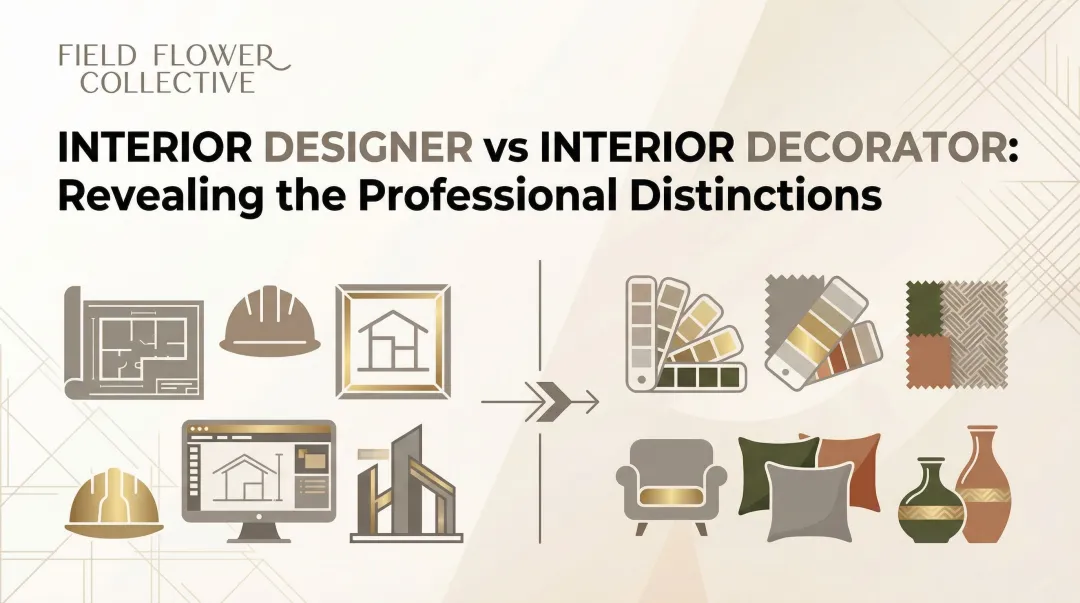
The distinction between interior designers and decorators centers on education, scope of work, and technical capabilities.
Education and Credentials: Interior designers typically hold bachelor's degrees and may be required to pass the NCIDQ (National Council for Interior Design Qualification) exam to become registered or certified. The NCIDQ certification requires approximately 3,520 hours of supervised work experience plus education from a CIDA-accredited program.
Decorators generally don't have the same formal educational or examination requirements.
Scope of Work:
- Designers handle structural changes, space planning, building code compliance, and construction documentation
- Decorators focus on furnishings, paint colors, and aesthetic enhancements within existing spaces
Regulation: Currently, 28 U.S. states, Washington D.C., and Puerto Rico regulate interior design practice, protecting public safety by ensuring practitioners meet minimum competency standards.
These regulations don't apply to decorators.
This explains why designers often lead projects from the ground up—new construction and major renovations—while decorators enhance existing spaces with furnishings and accessories.

Why Homeowners Hire Interior Designers
Hiring a designer isn't about luxury—it's about protecting your budget, saving months of stress, and getting results that actually work for your life.
Avoiding Costly Mistakes
The financial impact of DIY design failures is substantial. Research shows that 74% of homeowners regret their renovation decisions, with 24% citing overspending and 22% regretting extended timelines.
Even more telling, 55% of homeowners who attempted DIY projects regretted not hiring a professional, facing an average of three additional weeks of work to fix mistakes.
Those fixes cost an average of $862 in extra expenses that could have been avoided.
Designers help you avoid common errors like:
- Incorrect furniture sizing that makes rooms feel cramped or empty
- Poor space planning that blocks traffic flow
- Incompatible material selections that don't wear well
- Code violations that require expensive corrections
Time Savings and Expertise
Beyond avoiding financial pitfalls, designers save you countless hours of research and decision fatigue.
They handle sourcing, vendor coordination, and project details while you focus on daily life rather than managing renovation logistics. They bring fresh perspective and creative solutions you might not envision on your own.
Their trade relationships provide access to products and pricing unavailable to retail consumers, often offsetting design fees through better purchasing power.
Complex Project Management
For whole-home renovations, new construction, or commercial spaces, professional expertise ensures projects stay on track and on budget.
Designers coordinate multiple trades, manage timelines, and solve problems as they arise—preventing the delays and cost overruns that plague DIY projects. Studios like Field Flower Collective handle overall construction project management and contractor coordination, serving as your advocate throughout the entire process.
How the Interior Design Process Works
The design process typically includes 5-7 phases, spanning anywhere from a few weeks to several months depending on project scope.
Phase 1: Initial Consultation and Discovery
This foundation phase centers on understanding your unique needs through:
- In-depth discussion of goals, lifestyle needs, and budget
- Site visits with detailed measurements
- Assessment of existing conditions and opportunities
- Exploration of inspiration sources and design preferences
Field Flower Collective's approach emphasizes personalized consultations that explore how families actually live in their spaces. After clients submit a design questionnaire, the team conducts either in-home or video consultations to discuss inspiration sources, specific needs, timeline, and budget in detail.
Phase 2: Concept Development and Design Proposal
With discovery insights in hand, the designer translates your vision into tangible concepts:
- Mood boards capturing the aesthetic direction
- Floor plans showing layout options
- Preliminary design concepts with color palettes
- Material selections that reflect your style
You'll review these proposals and provide feedback. Refinements ensure complete alignment before the project advances, establishing the overall design direction that will guide all subsequent decisions.
Phase 3: Design Development and Specifications
The design vision becomes a detailed blueprint during this phase. Your designer finalizes every selection—furniture, finishes, lighting, and accessories—while creating comprehensive specifications and drawings.
Sourcing often involves trade-only resources unavailable to the public. The designer confirms and documents all details before implementation begins, ensuring clarity for you and any contractors involved.
Phase 4: Implementation and Project Management
Bringing the design to life requires careful orchestration:
- Coordinating with contractors and specialized trades
- Overseeing installations to ensure quality
- Managing timelines and project milestones
- Conducting regular site visits
- Problem-solving when unexpected issues arise
This phase demands both technical construction knowledge and strong communication skills to ensure your design is executed exactly as envisioned.
Phase 5: Final Installation and Styling
The final phase includes furniture arrangement, accessory placement, and styling. Field Flower Collective schedules dedicated installation days—or multiple days for larger projects—to execute complete transformations, leaving spaces meticulously styled and move-in ready.
The designer conducts a final walkthrough with you, ensuring every detail meets expectations before the project is considered complete.
When You Might Not Need an Interior Designer
For very small projects like refreshing one room with new paint and a few accessories, homeowners comfortable with DIY may not need professional help.
These smaller projects work well for DIY if you have:
- A very limited budget and clear vision
- Time to dedicate to planning and execution
- Comfort with hands-on decorating tasks
Just be aware of the risks. 70% of homeowners experienced issues during DIY projects, and 25% had to hire professionals to fix their mistakes.
Projects without structural changes, electrical work, or plumbing are your best candidates for the DIY route.
Conclusion
Interior designers are trained professionals who combine creativity, technical knowledge, and project management to create spaces that work as beautifully as they look.
Their expertise extends far beyond selecting furniture:
- Navigating building codes and permit requirements
- Coordinating contractors and managing timelines
- Preventing costly mistakes through experienced planning
- Translating your vision into functional, cohesive design
Understanding what designers actually do helps you make informed decisions about whether to hire one and what to expect from the process. For complex projects, whole-home renovations, or spaces that need to balance luxury with family life, professional design is a strategic investment that protects your time, budget, and peace of mind.
Frequently Asked Questions
What exactly does an interior designer do?
Interior designers transform interior spaces by combining aesthetics with functionality, handling space planning, material selection, and contractor coordination. They create technical documentation, ensure code compliance, and manage projects from concept to installation.
How much does an interior designer charge?
Pricing structures include hourly rates ($50-$500), flat fees per project, or a percentage of total costs. Rates vary based on the designer's experience, your location, and project complexity.
What's the difference between an interior designer and an interior decorator?
Designers have formal education and handle technical aspects like space planning, building codes, and structural changes. Decorators focus on furnishings and aesthetics without the same formal training or ability to manage construction-related work.
How long does the interior design process take?
Timelines vary widely—from a few weeks for small projects to 6-12+ months for whole-home renovations—depending on project scope, product availability, and construction timelines. Planning typically takes longer than homeowners expect.
Do I need an interior designer for just one room?
Yes, designers regularly work on single-room projects. Professional space planning ensures proper scale, proportion, and cohesive design that prevents costly furniture sizing and layout mistakes.
What should I prepare before meeting with an interior designer?
Gather inspiration images, define your budget and timeline, list must-haves and pain points, and prepare to discuss lifestyle needs. The more details you share, the better your designer can tailor solutions.