Introduction: Why Commercial Space Design Matters for Business Success
The physical environment of your business is more than just walls and furniture—it's a strategic asset that directly impacts your bottom line. Studies show that a 1% increase in customer dwell time correlates to a 1.3% increase in sales, demonstrating the direct connection between design choices and revenue generation.
Many business owners underestimate how design affects employee productivity, customer retention, and brand perception. Properties integrating experiential design concepts report a 25% increase in visits and a 22% rise in dwell times.
Biophilic design interventions improve productivity by an average of 11% and reduce voluntary job separation by 10%, offering significant cost avoidance in talent acquisition.
This article delivers actionable insights backed by design psychology, ROI considerations, and industry-specific guidance.
You'll discover how to leverage environmental psychology, optimize space planning, invest strategically in high-impact design elements, and work effectively with design professionals to create commercial environments that drive measurable business results.
TLDR:
- Strategic commercial design increases sales by extending customer dwell time and improving employee productivity
- Environmental psychology principles (color, lighting, spatial flow) directly influence behavior and decision-making
- The 70/20/10 color rule and 70/30 space allocation principle create balanced, functional environments
- High-impact investments like biophilic design and strategic lighting deliver measurable ROI
- Professional designers prevent costly mistakes while reflecting brand identity
What is Commercial Space Design?
Commercial space design is the strategic planning and aesthetic development of business environments, focusing on functionality, traffic flow, brand alignment, and regulatory compliance. Unlike residential design—which prioritizes personal preferences and comfort—commercial design must balance business objectives, customer experience, operational efficiency, and strict code requirements.
The National Council for Interior Design Qualification defines commercial interior design as involving the planning and design of interior elements in code-regulated spaces to protect public health, safety, and welfare.
This includes meeting ADA accessibility standards, building codes (IBC), fire safety requirements (NFPA 101), and OSHA workplace safety regulations. These requirements directly shape every design decision.
Key Objectives of Commercial Space Design
Successful commercial design achieves multiple business objectives:
- Maximize revenue through optimized customer flow and engagement
- Enhance employee productivity and retention through thoughtful workplace design
- Communicate brand positioning through material choices and aesthetics
- Balance upfront investment with long-term durability and maintenance costs
- Ensure regulatory compliance while maintaining design integrity
Types of Commercial Spaces
This article covers design strategies for offices, restaurants, retail stores, medical spas, and hospitality venues. Each requires specialized knowledge of industry requirements.
Restaurants demand efficient kitchen flow and front-of-house layouts. Medical spas require infection control protocols and privacy considerations. Retail environments prioritize merchandising principles and customer journey mapping. Office design balances collaboration needs with focused work zones.
Insight #1: The Psychology of Space—How Design Influences Customer Behavior and Employee Performance
Understanding Environmental Psychology in Commercial Design
Design choices directly shape how customers and employees think, feel, and act in your space. The field of environmental psychology proves that spatial design affects everything from purchase intent to employee alertness.
Studies show warm color tones and strategic lighting create measurable improvements in customer pleasure—the strongest predictor of whether someone enters a restaurant.
In workplaces, natural light and appropriate acoustics improve cognitive function, leading to faster thinking and fewer errors.
The concept of "third places"—public spaces distinct from home and work—is vital for customer loyalty. When your commercial environment fosters social interaction and belonging, it creates emotional connections that drive repeat visits and word-of-mouth marketing.
Color Theory and Mood Management
Color directly influences how customers perceive your brand and make decisions. Beyond aesthetics, it's a business tool that shapes emotions and behaviors throughout your space.
Color strategies by business type:
- Retail environments: Warm colors create urgency and impulse purchases; cool colors encourage browsing
- Restaurants: Warm tones (reds, oranges, golds) increase pleasure and likelihood of entry
- Offices: Cool blues and greens reduce stress and support focused work
- Wellness spaces: Soft neutrals and sage greens create calming environments that build trust
The 70/20/10 color rule:
This guideline distributes color as 70% dominant (walls, large surfaces), 20% secondary (upholstery, accent walls), and 10% accent (accessories, art). It creates visual harmony while preventing overwhelming spaces.

Lighting as a Design and Business Tool
Color sets the mood, but lighting brings it to life. Strategic lighting does more than illuminate—it actively sells. Studies show retail lighting improvements can boost sales significantly, with some businesses seeing double-digit increases after LED upgrades.
The three layers of lighting:
- Ambient lighting: General illumination that sets overall brightness and mood
- Task lighting: Focused light for specific activities (reading menus, examining products, computer work)
- Accent lighting: Directional light that highlights products, architectural features, or creates focal points
Critical lighting considerations:
- Restaurants: The Illuminating Engineering Society identifies a "Danger Zone" below 0.4 footcandles where guests cannot read menus or see food clearly, negatively impacting experience
- Retail: Warm color tones and colored light significantly enhance space identity and product appeal
- Offices: Employees prefer natural light and report feeling more satisfied, healthier, and productive when it's available; dynamic LED lighting impacts biological processes related to stress and well-being
Spatial Flow and Customer Journey Mapping
Intentional pathways guide customer movement and maximize engagement with products and services. Effective wayfinding reduces cognitive load and stress, particularly in complex facilities.
Wayfinding principles:
- Use environmental cues (signs, architectural features, maps) as primary information sources
- Implement color coding with warm colors as memorable landmarks
- Follow ISO 28564 guidelines for public information guidance systems
- Minimize decision points to reduce confusion and frustration
The decompression zone:
The first 5-15 feet of a retail store serves as a transition space where customers orient themselves. Keep this area uncluttered. Shoppers need to adjust before engaging with merchandise—cluttered entry zones directly depress conversion rates.
Insight #2: Functional Space Planning—Maximizing Efficiency Without Sacrificing Style
The 70/20/10 Design Rule Explained
The 70/20/10 rule creates visual balance in commercial interiors through strategic color and texture distribution. It serves as a practical guideline for cohesive design.
Application Example:
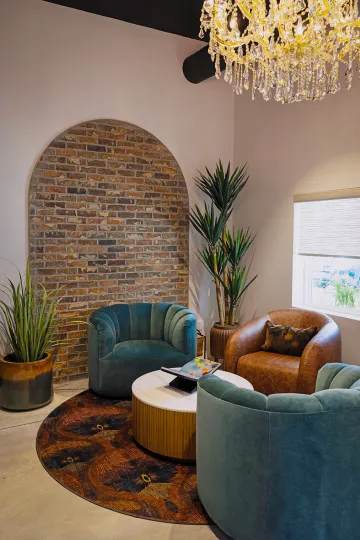
A modern office might use 70% soft gray on walls and carpet (dominant), 20% navy blue on feature walls and primary furniture (secondary), and 10% copper accents in lighting fixtures and accessories (accent).
This creates professional sophistication while maintaining visual interest and brand alignment.
The 70/30 Space Allocation Principle
Proper space planning prevents overcrowding while maximizing usable square footage. The General Services Administration recommends 200 usable square feet per person. This includes individual workspace, shared support areas, and circulation.
Circulation Considerations:
- Circulation area typically makes up 25-40% of total usable area
- Higher proportions of open-plan workstations require higher circulation multipliers (1.4 to 1.6)
- Enclosed offices and private spaces need lower circulation ratios
This approach ensures adequate breathing room and comfortable navigation, preventing spaces from feeling cramped.
Multi-Functional Design for Modern Commercial Needs
Building on smart space allocation, flexible design takes efficiency further by adapting spaces to different uses throughout the day.
Strategies for Adaptability:
- Modular furniture like reconfigurable seating, movable desks, and stackable chairs fit varying group sizes and activities
- Movable partitions create temporary private spaces or open areas as needed
- Convertible areas transition from individual focus work to collaborative meetings
- Hybrid concepts combine functions—work-café spaces, retail-experience centers, and multi-purpose hospitality venues
Activity-based working environments, which offer varied settings for different tasks, deliver higher job satisfaction, reduced stress, and increased collaboration.
Storage Solutions That Don't Compromise Design
Creative Storage Approaches:
- Built-in cabinetry with custom finishes that blend seamlessly with walls
- Furniture with integrated storage (benches with lift seats, tables with hidden compartments)
- Vertical storage solutions that maximize floor space
- Display storage that showcases products while organizing inventory
When to Choose Built-In vs. Standalone:
Built-in storage works best for permanent fixtures in offices and restaurants, while standalone solutions offer flexibility for retail and spaces that frequently reconfigure.
At Field Flower Collective, we help commercial clients select storage solutions that maintain design integrity while meeting practical needs—from med spa reception areas to restaurant back-of-house spaces.
Accessibility and Universal Design Principles
The 2010 ADA Standards mandate specific requirements for commercial facilities, but exceeding minimum standards creates inclusive environments that serve diverse populations.
Critical ADA Requirements:
- Clear floor space: minimum 30 inches by 48 inches
- Turning space: 60 inches diameter or T-shaped configuration
- Door openings: minimum 32 inches clear width
- Accessible routes throughout public areas
Universal design goes beyond compliance to create spaces for people of all ages and abilities, expanding your potential customer base and demonstrating social responsibility.
Insight #3: Design Elements That Deliver ROI—Investing Strategically in Your Space
High-Impact vs Low-Impact Design Investments
Not all design expenditures deliver equal returns. Strategic allocation focuses resources where they create the greatest business impact.
High-Impact Investments:
- Flooring: High-traffic durability prevents frequent replacement; polished concrete and porcelain tile offer lower lifecycle costs
- Lighting systems: LED upgrades deliver immediate sales increases (up to 12%) plus long-term energy savings
- Focal walls: Create memorable brand moments and Instagram-worthy backdrops that drive social sharing
- Biophilic elements: Deliver 53% ROI through productivity and retention gains
Lower-Impact Investments:
- Decorative accessories (easily updated, minimal functional benefit)
- Trendy finishes that require frequent updates
- Excessive customization with limited business justification
Material Selection for Durability and Aesthetics
Balancing upfront costs with long-term performance is critical for commercial ROI.
Lifecycle Cost Analysis:
Vinyl composite tile (VCT) has lower initial costs, but requires replacement every 10 years plus frequent maintenance (waxing, stripping).
Polished concrete and porcelain tile cost more upfront but last 40+ years with minimal maintenance, delivering significantly lower total cost of ownership.
Material Choices Communicate Brand Positioning:
- Luxury brands use natural stone, hardwoods, brass fixtures, and custom millwork
- Eco-conscious businesses choose reclaimed materials, FSC-certified wood, and low-VOC finishes
- High-tech companies feature polished concrete, glass, stainless steel, and integrated technology
- Approachable spaces incorporate warm woods, soft textiles, comfortable seating, and residential-inspired finishes
Material choices extend beyond surface selection—the most impactful materials often connect occupants to nature.
Biophilic Design and Its Business Benefits
Biophilic design—the integration of nature into built environments—delivers proven business benefits beyond aesthetics.
Quantified Benefits:
- 11% productivity improvement from biophilic interventions (plants, views, natural materials)
- 10% reduction in voluntary job separation, saving an estimated $402,979 annually for an office of 200 employees
- 44% reduction in absenteeism in one office refurbishment, saving $85,000 annually
Practical Implementation:
- Living walls and vertical gardens (high visual impact, air quality benefits)
- Natural materials (wood, stone, bamboo) in finishes and furniture
- Maximized natural light through strategic window placement and glass partitions
- Water features (fountains, aquariums) that provide soothing ambient sound
The ASID headquarters achieved 53% ROI in its first year through productivity gains and energy savings attributed to biophilic and wellness-focused design.
Technology Integration in Modern Commercial Spaces
Smart building features enhance customer experience and operational efficiency while future-proofing your investment.
Strategic Technology Considerations:
- Infrastructure planning for evolving technology needs
- Integrated HVAC and lighting controls for energy efficiency
- Customer-facing technology (interactive displays, mobile ordering, digital wayfinding)
- Back-of-house systems (inventory management, point-of-sale integration)
Design technology infrastructure with flexibility for upgrades without major renovations.
Sustainability as a Design and Marketing Asset
Sustainable design choices reduce operating costs while appealing to conscious consumers.
Research shows 79% of respondents confirm that sustainable elements improve space efficiency and effectiveness.
Eco-Friendly Strategies:
- Energy-efficient LED lighting (the ASID headquarters saved over 76 MWh and $7,636 in 15 months)
- Low-flow plumbing fixtures reducing water consumption
- Sustainable materials (recycled content, rapidly renewable resources)
- High-performance insulation and windows lowering HVAC costs
Sustainability enhances brand reputation, attracts environmentally-conscious customers, and delivers measurable operational savings.
Sustainability enhances brand reputation, attracts environmentally-conscious customers, and delivers measurable operational savings. Professional design consultation can help identify which sustainable investments deliver the strongest ROI for your specific business model and space requirements.
Insight #4: Industry-Specific Design Considerations
Restaurant and Hospitality Design Priorities
Restaurant design requires balancing kitchen efficiency, dining ambiance, acoustics, and table spacing for optimal turnover.
Critical Elements:
- Lighting levels: Maintain above 0.4 footcandles minimum; white tablecloths reflect 35 times more light than black, significantly improving facial visibility
- Music tempo: Fast-tempo background music increases table turnover during busy periods and has been linked to higher tip amounts; slow-tempo music extends dining duration
- Atmospherics: Lighting and music significantly influence perceived food quality and customer emotions, creating expectations around pricing—upscale atmospherics support premium pricing, while casual environments signal value.
Office and Coworking Space Design
While restaurants optimize for customer experience, office environments prioritize employee productivity. Modern workplace design has shifted toward activity-based working that supports collaboration, focus, and flexibility.
Key Considerations:
- Varied settings for different tasks (quiet zones, collaboration areas, social spaces)
- Natural light access improving cognitive function and employee satisfaction
- Acoustic control preventing distraction in open environments
- Neuroinclusive design (accommodating different sensory processing needs through lighting controls, quiet zones, and flexible workstation options)
Studies show that high-performing workplaces balancing focus and collaboration enable employees to experiment with new ways of working at 1.3 times the rate of unbalanced environments.
Retail Space Design Strategies
In retail environments, every square foot must work toward conversion. Strategic merchandising, sightlines, and experiential moments all influence purchase behavior.
Essential Strategies:
- Decompression zone: Keep the first 5-15 feet uncluttered for customer orientation
- Strategic product placement: Position high-margin items in high-traffic areas
- Instagram-worthy moments: Create visually striking backdrops that encourage social sharing
- Sightlines: Ensure clear views to featured products from entry points
The fusion of retail and entertainment (known as "retailtainment") has shown 25% increases in store visits and 22% jumps in dwell times, according to industry research.
Medical and Wellness Spa Environments
Medical spas require calming, clean, private spaces that build trust while meeting strict regulatory requirements.
Design Priorities:
- Infection control: MERV 13+ ventilation, seamless non-porous surfaces, clear separation of clean and dirty flows
- HIPAA compliance: Sound-absorbing finishes, private registration rooms, privacy films on glass preventing information exposure
- Calming aesthetics: Soft neutrals, natural materials, appropriate lighting creating relaxation
- Functional layout: Efficient staff workflow, adequate treatment room sizing, proper storage
Failure to design for HIPAA compliance can result in fines up to $250,000, making professional expertise essential.
Insight #5: Working With Professional Designers—When and How to Invest in Expertise
When to Hire a Commercial Interior Designer
Professional design expertise provides greatest value in scenarios where mistakes carry significant financial consequences.
Ideal Situations for Professional Help:
- New builds requiring comprehensive space planning and systems coordination
- Major renovations involving structural changes or code compliance
- Brand repositioning needing cohesive visual identity across all touchpoints
- Complex regulatory environments (healthcare, food service, multi-tenant buildings)
- High-stakes customer-facing spaces where design directly impacts revenue
Design mistakes are costly. Poor layout depresses retail conversion rates, inadequate lighting reduces restaurant appeal, and non-compliant healthcare spaces face substantial fines.
What to Expect From the Design Process
Commercial interior design projects follow structured phases that ensure thorough planning and successful execution.
Typical Project Phases:
- Discovery/Consultation: Define goals, establish budget, assess space, discuss inspiration and functional requirements
- Concept Development: Create initial layouts, develop design direction, select materials and finishes
- Design Documentation: Produce technical drawings for permitting, create specifications for contractors
- Implementation Oversight: Coordinate with contractors, manage installation, ensure design intent is realized
This structured approach is exactly how Field Flower Collective works with commercial clients. Their personalized consultation discusses inspiration, needs, timeline, and budget, drawing on a unique fashion industry background that translates into keen attention to detail, color expertise, and understanding of texture.
Their process ensures alignment before any purchases are made, preventing costly changes mid-project.
Maximizing Your Investment in Design Services
Preparation Tips:
- Define clear business objectives (increase sales by X%, improve employee retention, reposition brand)
- Gather inspiration images showing styles, colors, and spaces you admire
- Establish realistic budgets including contingency (typically 10-20% of construction budget)
- Document functional requirements (storage needs, equipment specifications, accessibility considerations)
Effective Communication:
- Provide constructive feedback focused on specific elements
- Ask questions when you don't understand recommendations
- Trust professional expertise while advocating for business needs
- Maintain open dialogue throughout the project
Designers who blend luxury with practicality bring real-world understanding to commercial projects. This perspective ensures spaces function beautifully under actual operating conditions, not just in photographs.
Frequently Asked Questions
What is commercial space design?
Commercial space design strategically plans business environments to balance functionality, brand expression, and customer experience while meeting strict building codes and accessibility standards. Unlike residential design, it prioritizes business objectives and regulatory compliance alongside aesthetic development.
What are the 70/20/10 and 70/30 rules in commercial space design?
The 70/20/10 color rule distributes color as 70% dominant, 20% secondary, and 10% accent to create visual balance. The 70/30 space allocation principle dedicates 70% to functional space and 30% to circulation, preventing overcrowding while maximizing usable square footage.
How much should I budget for commercial interior design?
Budget 10-20% of construction costs for design services, or $10-50 per square foot. Costs vary based on space size, regulatory requirements, custom elements, and whether you're renovating or building new.
What's the difference between commercial and residential interior design?
Commercial design requires strict code compliance (ADA, building codes, fire safety), emphasizes durability for high-traffic use, prioritizes business objectives over personal preferences, and must accommodate diverse users. Residential design focuses on personal comfort, has fewer regulatory constraints, and serves a single household's specific needs.
How long does a commercial space design project typically take?
Design phase takes 4-8 weeks for concept and documentation. Construction varies by scope: minor updates (2-4 weeks), major renovations (3-6 months), new builds (6-12+ months). Timeline depends on complexity, permits, and contractor availability.
Do I need a professional designer for my commercial space, or can I DIY?
Professional help is essential for new builds, complex spaces requiring code compliance, brand development, and customer-facing environments where design directly impacts revenue. DIY is feasible only for minor cosmetic updates in established businesses with clear brand identity and simple functional requirements.