Introduction: The Enduring Appeal of Mid-Century Modern Design
For over 70 years, mid-century modern design has outlasted passing trends to remain a favorite among homeowners. The reason is simple: MCM balances form and function to create calm, uncluttered spaces that work beautifully for contemporary living.
What makes MCM relevant today is its alignment with modern desires for mindful, intentional living. The style's emphasis on clean lines and organic forms creates visual serenity without sacrificing practicality—a combination that resonates deeply with families seeking elevated yet livable spaces.
Homes featuring authentic mid-century styling command an 8-12% resale premium compared to similar properties, with a 30% increase in transactions for MCM-styled homes.
This guide covers the core principles that define mid-century modern design, practical strategies for implementing the style in your home, and expert insights on making MCM work for contemporary family living—including considerations for Florida's climate and lifestyle.
TLDR: Quick Takeaways
- Clean lines and organic forms define MCM's 1945-1970s roots
- Teak, walnut, and manufactured materials create balanced, uncluttered spaces
- Durable fabrics and smart storage make MCM work for families with kids
- Open floor plans suit Florida living—merging indoor-outdoor flow with timeless style
What is Mid-Century Modern Interior Design?
Historical Context
The mid-century modern movement emerged in post-WWII America, spanning roughly 1945 to 1969, as a response to the era's optimism and technological innovation.
This period was defined by adapting wartime technologies—such as molded plywood, fiberglass, and steel—into residential furnishings, making good design accessible to everyday families rather than just the wealthy elite.
The philosophy driving MCM was simple: "form follows function." Designers rejected the ornate, heavily decorated styles of previous generations in favor of honest materials and purposeful design.
Every element served a practical purpose while contributing to the overall aesthetic—no room for purely decorative flourishes that didn't enhance daily living.
This movement represented more than just a design trend; it reflected the forward-thinking spirit of post-war America, where innovation and democratic ideals extended even to how people furnished their homes.
Core Design Philosophy
At its heart, mid-century modern design celebrates the relationship between indoor and outdoor spaces.
Large windows, sliding glass doors, and strategic orientation toward natural views blur the boundaries between interior and exterior environments—a principle particularly relevant for Florida homes with beautiful year-round outdoor settings.
MCM rejected traditional design's complexity in favor of simplicity and material honesty:
- Rather than hiding wood grain, designers celebrated natural textures
- Instead of ornate embellishments, they let clean lines speak for themselves
- Organic forms took precedence over rigid geometric patterns
This philosophy aligns perfectly with contemporary desires for uncluttered, mindful living spaces.
In an era of information overload and visual chaos, MCM's emphasis on intentional design and edited aesthetics provides a calming counterbalance that modern families increasingly seek.
Key Characteristics of Mid-Century Modern Design
Clean Lines and Geometric Forms
Mid-century modern design emphasizes horizontal and vertical lines that create visual calm and structural clarity. Furniture pieces feature sleek silhouettes with minimal embellishment, often incorporating asymmetrical balance.
The iconic tapered leg—thin at the bottom, slightly wider at the top—became a signature element of MCM furniture, creating an airy, elevated appearance that maintains clear sightlines across rooms.
Geometric patterns also play a prominent role:
- Sunburst motifs in wall art and lighting fixtures
- Atomic age designs reflecting mid-century optimism
- Abstract shapes appearing in textiles and decorative accessories
Organic and Natural Elements
Balancing the geometric precision are organic shapes inspired by nature. Kidney-shaped coffee tables, egg chairs, and curved sofas soften the angular elements while maintaining cohesion.
These biomorphic forms create visual warmth and approachability.
Mid-century designers celebrate natural wood grains rather than conceal them. Teak, walnut, and rosewood stand out as favorites for their rich tones and distinctive patterns.
The wood's natural beauty becomes a design feature in itself, often left with minimal finish to showcase its inherent character.
Plants and natural textures integrate seamlessly into MCM interiors, providing organic counterpoints to manufactured materials and reinforcing the connection to nature that defines the style.
Functional Design
Every piece in a mid-century modern space serves a clear purpose. Built-in storage solutions, multi-functional furniture, and space-saving innovations reflect the movement's commitment to practical living. Credenzas with sliding doors conceal clutter while maintaining clean exterior lines, while nesting tables provide flexible surface space without permanent visual weight.
This functional approach accommodated the casual, modern lifestyles emerging in post-war America, where formal living rooms gave way to flexible family spaces that adapted to multiple activities throughout the day.
Connection to Nature
Large windows and sliding glass doors serve as more than architectural elements—they're fundamental to the MCM philosophy of dissolving boundaries between interior and exterior spaces. Natural light becomes a design element itself, with rooms oriented to maximize views and sunshine.
For homeowners in St. Johns County and Ponte Vedra, this principle offers particular advantages. Florida's year-round temperate weather and coastal landscapes make indoor-outdoor integration not just aesthetically pleasing but practically beneficial, extending living spaces beyond four walls.
Mix of Materials
Mid-century modern design creates visual interest through material contrast:
- Warm wood paired with cool metal
- Smooth glass contrasted with textured stone
- Molded plastic combined with natural fibers
A teak credenza might feature brass hardware and sit beneath a mirror with a metal frame, while molded plastic chairs rest on wooden legs.
These contrasting textures prevent monotony while maintaining the uncluttered aesthetic that defines the style. The key is intentional pairing rather than random mixing—each material relationship serves a visual purpose.
Open Floor Plans
Mid-century modern architects pioneered the **open-concept** living that has become standard in contemporary homes. Rather than segmented rooms with defined boundaries, MCM spaces flow into one another while maintaining distinct functional zones.
Techniques for defining areas without walls include:
- Strategic furniture placement that creates natural boundaries
- Area rugs that anchor specific zones
- Varied lighting levels that distinguish different functional areas
- Subtle level changes or ceiling height variations
Color Palettes and Materials in MCM Interiors
Signature Color Schemes
Mid-century modern color palettes start with neutral foundations—whites, creams, warm grays, and beiges—that allow architectural elements and furniture forms to take center stage. These neutral backgrounds create visual calm and flexibility for future updates.
Strategic pops of color add personality and energy:
- Mustard yellow and gold bring warmth and optimism
- Burnt orange and rust connect to natural, earthy landscapes
- Teal and avocado green provide cool, refreshing contrast
- Olive and sage reflect organic, outdoor influences
The key to timeless MCM color schemes is using muted, earthy interpretations rather than high-contrast neon palettes, which can quickly feel dated.
Natural Materials and Textures
Wood dominates mid-century modern interiors, particularly teak, walnut, and oak in both solid and veneer applications. These woods offer rich grain patterns and warm tones that age beautifully, developing character over time.
Complementary natural materials include:
- Leather — develops a desirable patina over time
- Wool — adds warmth in upholstery and rugs
- Stone — creates visual weight in countertops and accent walls
- Natural fibers — jute and linen bring organic texture
Fabric weight, texture, and drape matter for authentic MCM upholstery. Designers with fashion industry backgrounds—like the team at Field Flower Collective—bring decades of textile expertise to selecting fabrics that are both beautiful and durable for family living.
Modern Interpretations
Contemporary MCM incorporates updated neutrals—warmer grays, softer whites, and creamier beiges—alongside traditional palettes. For coastal Florida homes, lighter, breezier color schemes work particularly well, reflecting the region's bright sunlight and beach-adjacent lifestyle.
Test color combinations throughout your home to ensure cohesion while allowing for subtle room-to-room variations. Natural light affects colors differently throughout the day. Florida's intense sunshine can dramatically alter how colors appear compared to northern climates.
Avoiding Dated Looks
While vintage MCM color combinations have charm, some can feel retro rather than timeless. Avoid heavy doses of orange-and-brown combinations, which can read as overly period-specific. Instead, use bold vintage colors selectively as accents rather than dominant schemes.
Refreshing MCM spaces over time is simple: swap accent colors through pillows, artwork, and accessories while maintaining your core neutral palette. This approach keeps spaces feeling current without requiring major renovations.
Furniture and Decor Essentials
Iconic MCM Furniture Pieces
Essential mid-century modern furniture includes:
- Low-profile sofas and sectionals that maintain open sightlines
- Lounge chairs in the style of Eames, Noguchi, or Saarinen designs
- Credenzas and sideboards with walnut veneers and minimal hardware
- Platform beds with simple headboards or none at all
- Coffee tables featuring organic shapes like kidney or oval forms
What makes furniture authentically MCM? Look for tapered legs, organic curves, exposed joinery that celebrates craftsmanship, and mixed materials that create visual interest.
Original pieces from manufacturers like Herman Miller and Knoll command premium prices, while high-quality reproductions offer the aesthetic at more accessible price points.
Lighting as Sculpture
Mid-century modern lighting serves dual purposes: functional illumination and sculptural art.
Iconic fixtures include:
- Sputnik chandeliers with multiple arms extending from a central sphere
- Arc floor lamps that sweep overhead without ceiling wiring
- Globe pendants offering diffused, ambient light
- Geometric fixtures with clean lines and interesting shapes
Layer your lighting strategically. A Sputnik chandelier provides ambient light in a dining area. An arc lamp offers task lighting for reading. Small table lamps create intimate accent lighting in conversation areas.
Art and Accessories
Mid-century modern interiors embrace abstract art, geometric prints, and black-and-white photography. The "less is more" approach means selecting statement pieces rather than creating collections that clutter surfaces and walls.
Choose ceramics, sculptures, and textiles that complement rather than overwhelm. A single large ceramic vase makes more impact than multiple small pieces scattered across a credenza. One bold abstract painting anchors a wall more effectively than a gallery wall of small prints.
Mixing Vintage and New
Once you've selected your decorative elements, consider how to source them. Combining authentic vintage MCM pieces with contemporary reproductions creates a collected, personal look rather than a museum time capsule.
When shopping for vintage furniture, look for solid construction, original finishes (or careful refinishing), and authentic maker's marks.
Mixing eras prevents the space from feeling too precious or untouchable. A vintage Eames lounge chair might pair beautifully with a contemporary sofa in MCM styling, while new reproduction dining chairs surround a refinished vintage table.
Storage and Organization
MCM storage solutions maintain the uncluttered aesthetic through strategic concealment:
- Credenzas with sliding doors hide media equipment and everyday items
- Room dividers with built-in shelving define spaces while providing storage
- Modular wall units offer flexible storage that adapts to changing needs
Maintaining visual calm requires thoughtful organization. Conceal modern technology behind cabinet doors, use storage baskets in natural materials to corral small items, and regularly edit possessions to prevent accumulation that disrupts the clean aesthetic.
Making Mid-Century Modern Work for Modern Family Living
Balancing Aesthetics with Practicality
Mid-century modern design adapts beautifully to family life when you choose appropriate materials. Performance fabrics in MCM colors, combined with stain-resistant treatments, allow you to maintain the aesthetic while withstanding the realities of children, pets, and daily use.
Other family-friendly elements include:
- Washable area rugs in geometric patterns
- Rounded furniture edges (organic shapes are inherently safer)
- Closed storage solutions that conceal toys and everyday clutter
- Performance fabrics that resist stains while maintaining texture
Creating Flexible Spaces
MCM's open floor plans naturally support multi-functional living. A play area during the day transitions seamlessly to an entertaining space in the evening when you store toys in credenzas or built-in cabinets.
Furniture arrangement creates flexible zones that adapt as children grow and family needs change. Maintaining visual calm requires:
- Designated storage for each family member's belongings
- Clever concealment strategies for everyday items
- Regular decluttering to prevent accumulation
Personalizing Your MCM Space
Add personal touches without cluttering MCM's clean lines by displaying family photos in simple frames with minimal matting, grouping them intentionally rather than scattering them. Create gallery walls with consistent frame styles and spacing that maintains visual order.
Custom-made wallpaper and art pieces add unique, tailored elements that make MCM spaces feel personal rather than generic or museum-like. These pieces can incorporate family stories and individual preferences while respecting the design's clean aesthetic.
Room-by-Room Mid-Century Modern Implementation
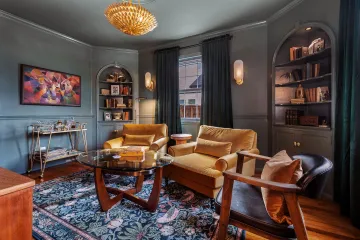
Living Rooms
Essential MCM living room elements include:
- Low-profile sectional or sofa with clean lines
- Iconic lounge chair (Eames, Womb, or Egg chair) for reading or conversation
- Coffee table with organic shape or sculptural base
- Statement lighting like an arc floor lamp or Sputnik chandelier
Arrange furniture to promote conversation—face seating pieces toward each other rather than all toward the television. Keep pathways clear and sightlines open.
Hide entertainment equipment in credenzas with ventilation and cable management to maintain clean lines.
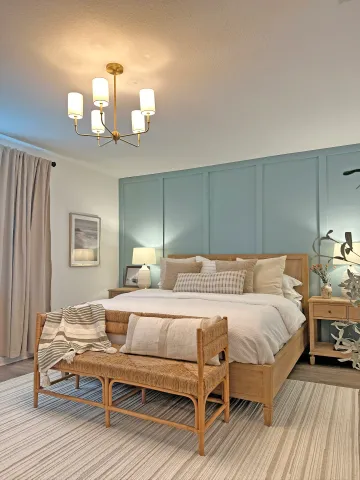
Bedrooms
MCM bedroom essentials create serene, uncluttered retreats:
- Platform bed with simple headboard (or none)
- Streamlined nightstands with tapered legs
- Minimal window treatments that filter light without blocking views
- Built-in or freestanding storage that conceals clothing and personal items
Layer textures through linen bedding, wool throws, and wood furniture to add warmth without visual clutter. Keep surfaces clear except for one or two carefully selected accessories.
Kitchens and Dining Areas
Mid-century modern kitchens feature flat-panel cabinets, minimal hardware, integrated appliances, and occasional open shelving that displays carefully curated items.
Walnut or teak cabinet finishes provide warmth, while quartz countertops offer durability with subtle veining.
Dining areas center on a sculptural table—whether tulip-style pedestal or sleek wood—surrounded by iconic chairs like Eames molded plastic, Bertoia wire, or Wishbone designs.
Pendant lighting defines the dining zone in open-plan spaces.
Additional Spaces
Apply MCM principles throughout your home:
- Simple home office desks with clean lines, ergonomic chairs with MCM styling, and adjustable task lighting
- Floating bathroom vanities with walnut finishes, geometric tile floors, and minimal accessories
- Teak outdoor furniture and simple planters that create seamless transitions from indoor spaces
For St. Johns County homeowners looking to implement MCM design throughout their homes, professional guidance ensures each room connects cohesively while maintaining the style's signature balance of form and function.
Avoiding Common Mid-Century Modern Mistakes
The Museum Effect
Creating spaces that look perfect but feel untouchable defeats MCM's purpose of functional beauty.
Layer in warmth through soft textiles like throw pillows and blankets, display personal items that tell your story, and allow spaces to show gentle signs of being lived in.
Balance design integrity with comfortable living by:
- Choosing durable materials that withstand daily use
- Incorporating practical storage solutions
- Remembering MCM was designed for real families, not museum displays
Overdoing Retro Elements
Authentic MCM differs from kitschy retro. Avoid turning your space into costume design by:
- Using vintage accessories selectively alongside contemporary elements
- Limiting statement vintage pieces to one or two per room
- Letting quality pieces shine rather than filling every surface
Filling every surface with period accessories feels forced and overwhelming.
The difference lies in restraint and intention—choose pieces because they're beautiful and functional, not simply because they're from the right era.
Ignoring Scale and Proportion
MCM furniture is typically lower and more horizontal than traditional pieces, creating an airy, open feeling.
Mixing low-profile MCM sofas with oversized contemporary recliners disrupts visual harmony and makes spaces feel disjointed.
Maintain visual harmony by:
- Choosing appropriately scaled furniture for your room size
- Maintaining consistent visual weight across pieces
- Testing arrangements before purchasing when possible
- Sticking to essential pieces in smaller rooms
Frequently Asked Questions
What is mid-century modern style interior design?
Mid-century modern is a design movement from roughly 1945-1970s known for clean lines, organic forms, and minimal ornamentation. The style emphasizes function over decoration, celebrating honest materials and indoor-outdoor living that remains timeless today.
What are 5 key elements of MCM decor?
The five defining elements are clean lines and geometric forms, natural materials like wood and leather, organic shapes that soften angular elements, minimal ornamentation for clutter-free spaces, and indoor-outdoor connection through large windows and natural light.