Introduction: Transform Your Space with Stunning Interior Design
Your home should be your sanctuary—but between school drop-offs, work commitments, and daily routines, you often push reimagining your space to the bottom of your priority list.
Many families struggle with rooms that don't reflect their style, furniture that doesn't fit properly, or spaces that feel chaotic rather than calming.
Strategic design choices can dramatically transform any space without requiring major renovations or unlimited budgets. By understanding fundamental design principles—from color psychology to furniture placement—you can create a home that's both stunning and livable. Whether you're refreshing a single room or reimagining your entire home, the right approach makes all the difference.
TLDR: Key Takeaways for Transforming Your Space
- Define a clear vision based on lifestyle needs, not trends
- Master color psychology and layered lighting to control mood and maximize natural light
- Arrange furniture strategically using proper scale, traffic flow, and conversation zones
- Layer textiles and textures to add depth while maintaining a cohesive color story
- Meaningful art and accessories that tell your family's story
Start with a Clear Vision: Define Your Design Goals
Understanding Your Lifestyle Needs
Before selecting a single paint color or furniture piece, assess how your family actually lives. Walk through your daily routines and identify pain points: Does your living room lack seating for family movie nights? Does your entryway become a dumping ground for backpacks and shoes?
Families with young children need durable, easy-to-clean materials like performance fabrics and sealed hardwood rather than delicate silks or light-colored carpets.
Identify which rooms need to serve multiple functions. A guest room might also function as a home office, requiring a desk that doesn't overwhelm the space and a sofa bed that's actually comfortable. Your kitchen island may need to handle homework sessions, meal prep, and casual dining—all requiring different lighting and seating considerations.
Creating a Cohesive Design Story
A consistent design language throughout your home starts with selecting 2-3 core style elements. Rather than decorating each room in a completely different style, choose a foundation—modern coastal, transitional farmhouse, or contemporary minimalist—and let that guide your decisions.
This doesn't mean every room looks identical, but they should feel like they belong in the same home.
Before purchasing anything, create a mood board or digital inspiration collection. Gather images, fabric swatches, and paint chips that resonate with you. Look for common threads: Do you gravitate toward warm woods and organic textures? Cool grays and clean lines?
This clarity prevents costly mistakes and impulse purchases that don't fit your overall vision.
Setting Realistic Budgets and Timelines
Design projects require strategic prioritization. High-impact areas like living rooms and kitchens offer the most transformation for your investment. Within each room, sequence your spending: paint and lighting first (relatively affordable, high impact), furniture second, accessories last.
Most designers recommend allocating your budget this way:
- Design fees: 10-20% of total project budget
- Furnishings: 15-25% of home value for whole-home projects
- Construction: 35-60% if structural changes are involved
For a single room refresh, expect to invest $15,000-$50,000+ depending on quality and scope. A complete room transformation requires 8-9 months from concept to installation, while full renovations may take 18-24 months.
The Professional Advantage
Understanding when to DIY versus hire professional help saves both time and money. Painting walls or styling shelves? Tackle it yourself. Space planning for a renovation or selecting a cohesive color palette for your entire home? Professional designers save time and costly mistakes.
Homes with professional interior design can sell for up to 10% more than comparable properties, and designers prevent expensive errors like purchasing oversized furniture or choosing paint colors that clash with your lighting. Field Flower Collective's founders spent two decades in fashion design, developing expertise in fabric quality, texture combinations, and pattern mixing. They now apply this specialized knowledge to create functional yet beautiful spaces for St. Johns County families.
Master Color and Light: The Foundation of Any Space
Color Psychology and Selection
Different colors affect mood and spatial perception in measurable ways. Warm tones (reds, oranges, yellows) create intimacy and energy, making them ideal for dining rooms and social spaces.
Cool tones (blues, greens, purples) promote calm and focus, perfect for bedrooms and home offices. Neutrals (grays, beiges, whites) provide versatility and make small spaces feel larger.
Apply the 60-30-10 rule for balanced color distribution:
- 60% dominant color - Usually walls and large furniture pieces
- 30% secondary color - Upholstery, curtains, accent furniture
- 10% accent color - Throw pillows, artwork, accessories
This ratio prevents rooms from feeling overwhelming or visually chaotic while maintaining interest.
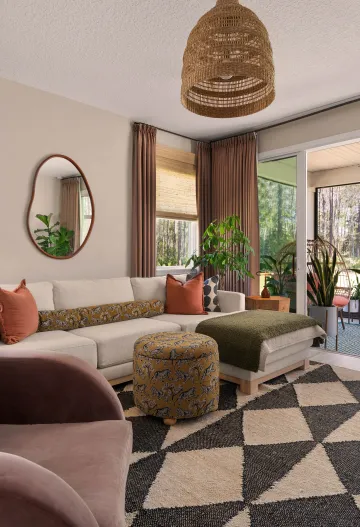
Test paint colors in your actual space before committing. Paint large swatches (at least 2x2 feet) on different walls and observe them throughout the day—colors shift dramatically, appearing warmer in morning sun and cooler in afternoon shade.
Creating Depth with Color Layering
Varying shades of the same color family create sophisticated, layered looks. A bedroom might feature walls in soft sage, bedding in deeper forest green, and accessories in pale mint—all greens, with enough variation to create visual depth without clashing.
Strategic accent walls and color blocking work best when placed where the eye naturally goes:
- Behind a bed or headboard
- Around a fireplace surround
- Behind built-in shelving or display areas
- Framing architectural features
This creates intentional focal points without overwhelming the space.
The Three Types of Lighting
Complete lighting plans integrate three distinct layers:
Ambient lighting provides overall illumination for safe navigation—ceiling fixtures, recessed lights, and chandeliers that light entire rooms.
Task lighting focuses on specific activities—reading lamps beside beds, pendant lights over kitchen islands, under-cabinet lighting for food prep.
Accent lighting highlights architectural features or artwork—track lighting, wall sconces, or picture lights that add drama and depth.
Follow these placement guidelines:
- Dining chandeliers: 30-36 inches above the table for standard 8-foot ceilings (add 3 inches per additional foot of ceiling height)
- Bedside lamps: Within arm's reach, with the bottom of the shade at shoulder height when seated
- Kitchen task lighting: Positioned to eliminate shadows on work surfaces
Natural Light Maximization and Florida Considerations
Strategic window treatments and mirror placement maximize natural light. Sheer curtains or top-down/bottom-up shades allow light in while maintaining privacy.
Position mirrors opposite windows to bounce light deeper into rooms.
Managing Florida's intense sunlight requires balance—something Field Flower Collective understands from years of designing in St. Johns County. Double-pane solar control glazing with high visible transmittance maintains brightness while reducing heat gain.
Automated shades or skylights with controls adjust throughout the day, protecting furnishings while keeping spaces bright.
Lighting Control and Flexibility
Dimmer switches and smart lighting systems offer essential mood control. Bright light energizes morning routines, while dimmed lighting creates relaxation in evenings.
Smart systems let you create scenes—"Family Movie Night" dims overhead lights while maintaining pathway lighting, or "Dinner Party" sets ambient lighting at 60% with accent lights at full brightness.
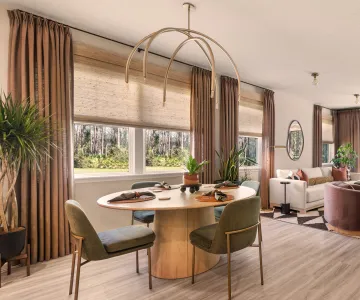
Furniture and Layout Strategies: Maximize Function and Flow
Space Planning Fundamentals
Measure rooms accurately before purchasing furniture. Create scaled floor plans (graph paper or apps like RoomSketcher) to test arrangements virtually before moving heavy pieces. This prevents the common mistake of buying furniture that's too large or too small for your space.
Maintain clear traffic pathways between furniture pieces:
- 30-36 inches for main walkways in most rooms
- 18-24 inches minimum in tight spaces
- Wider paths feel more comfortable and prevent that "obstacle course" feeling
Apply the "float your furniture" principle in larger rooms. Pull sofas and chairs away from walls to create intimate conversation zones, using the space behind for console tables or floor lamps. In smaller rooms, anchoring furniture against walls maximizes usable floor space.
Furniture Scale and Proportion
Understanding scale prevents the showroom-to-home disconnect that leaves rooms feeling off-balance.
Select appropriately sized furniture for your room dimensions. A sectional that looks perfect in a showroom may overwhelm a 12x14 living room, while apartment-sized furniture can look lost in a spacious great room.
Consider visual weight—a glass coffee table feels lighter than a solid wood trunk, even if they're the same size. Balance heavy pieces (a substantial media console) with lighter ones (open shelving, leggy chairs) across the room to prevent one side from feeling anchored while the other floats.
Multi-Functional Furniture Solutions
Dual-purpose furniture transforms how families use their spaces:
- Storage ottomans that provide seating, footrests, and hidden toy storage
- Sofa beds for guest rooms that double as home offices
- Extendable dining tables that accommodate daily meals and holiday gatherings
- Built-in benches with storage in mudrooms or breakfast nooks
Versatile furniture allows spaces to evolve with changing family needs without requiring complete redesigns.
Creating Conversation Zones
Arrange seating to facilitate interaction—typically 8-10 feet apart maximum. Closer than 4 feet feels uncomfortably intimate for guests; farther than 10 feet requires raising voices. Use angled or facing arrangements rather than side-by-side seating.
Area rugs define and anchor furniture groupings. In living rooms, rugs should accommodate at least the front legs of sofas and chairs—ideally all furniture legs. This grounds the arrangement and makes the space feel intentional rather than haphazard.
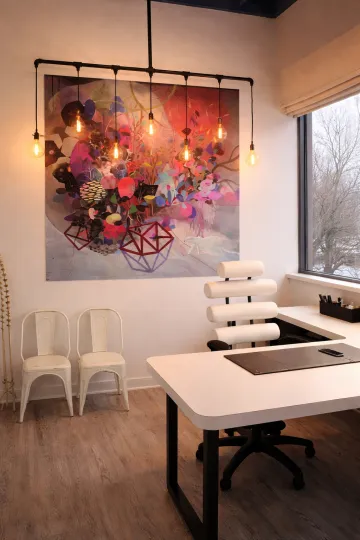
The Power of Negative Space
Leave breathing room between furniture pieces. Not every wall needs something against it; not every surface needs decoration. Negative space prevents cluttered feelings and contributes to a sophisticated, curated look.
This restraint separates professionally designed spaces from overstuffed rooms. At Field Flower Collective, we help homeowners strike this balance—knowing when to add elements and when to let a space breathe, creating interiors that feel both elevated and livable.
Textiles, Textures, and Layers: Add Warmth and Personality
Layering Fabrics for Depth
Mix different textile weights and textures to create visual interest and texture you can feel. A living room might combine smooth leather sofas, nubby linen pillows, soft velvet throws, and a chunky wool rug.
This contrast prevents rooms from feeling one-dimensional or cold.
Coordinate throw pillows, blankets, and window treatments within your established color palette. Use your 60-30-10 rule here too—if your walls are neutral (60%), upholstery might be your secondary color (30%), with pillows and throws providing accent pops (10%).
Rug Selection and Placement
Correct rug sizing is crucial:
Living rooms: Rugs should be 6-8 inches wider than the sofa on both sides, with at least front furniture legs resting on the rug. Ideally, all furniture legs sit on the rug.
Dining rooms: Rugs should extend at least 24 inches beyond the table on all sides to accommodate pulled-out chairs.
Bedrooms: Large rugs should extend 2-3 feet beyond the sides of the bed, creating a soft landing for bare feet.
Beyond sizing, rug patterns and textures define zones in open floor plans. A jute rug might ground a casual seating area, while a patterned wool rug defines the formal living space—both in the same great room but serving different purposes.
Pattern Mixing Techniques
Successfully mixing patterns requires balancing scale, color, and hierarchy—techniques borrowed from fashion design. Mix patterns by:
- Varying scale - Combine one large-scale pattern, one medium, one small
- Maintaining consistent color story - All patterns should share at least one common color
- Using one dominant pattern - Let one pattern take the lead while others play supporting roles
Using one dominant pattern - Let one pattern take the lead while others play supporting roles
Field Flower Collective's founders bring two decades of fashion industry experience to textile selection, applying pattern-mixing principles they honed sourcing fabrics internationally to create layered, sophisticated interiors.
Personalize with Art and Accessories: Make It Uniquely Yours
Art Placement and Gallery Walls
Follow the 57-inch rule for hanging art—the center of the piece (or center of a gallery wall grouping) should be 57 inches from the floor, representing average eye level.
When hanging art above furniture, the bottom of the frame should sit 6-8 inches above the top of the sofa or console.
Create cohesive gallery walls by treating multiple pieces as one large rectangle. Lay out your arrangement on the floor first, maintaining 3-6 inches of consistent spacing between frames.
This prevents the "random collection" look and creates intentional impact.
Styling Surfaces and Shelves
Apply the rule of odd numbers—group accessories in 3s or 5s rather than pairs. Vary heights for visual interest: a tall vase, medium candlestick, and short decorative box create more dynamic arrangements than three items of equal height.
Leave breathing room on shelves—aim for 50-60% filled, maximum. Edit ruthlessly, removing items that don't serve the aesthetic or hold meaning. This restraint creates sophisticated, curated looks rather than cluttered, busy ones.
Custom Elements and Personalization
Custom wallpaper and art pieces tailored to your taste ensure every element reflects personal style while maintaining design cohesion. These bespoke touches transform spaces from "nicely decorated" to "uniquely yours."
Ways to make spaces personally meaningful:
- Display children's artwork in matching frames for cohesive gallery walls
- Showcase vintage finds from family estates as focal points
- Incorporate travel memorabilia that sparks conversation
- Create vignettes around meaningful collections
- Frame family photos with consistent matting and frames
These pieces tell your story in ways generic decor never can.

Natural Elements and Greenery
Plants and natural materials (wood, stone, organic fibers) add warmth and life to any space.
For busy families, the University of Florida recommends low-maintenance indoor plants like pothos, snake plants, spider plants, and ZZ plants—all tolerant of occasional neglect while improving indoor air quality.
Bringing It All Together: Your Design Journey
Transformation happens through intentional, strategic choices rather than expensive overhauls. The foundations of stunning interior design include:
- Starting with a clear vision based on your lifestyle needs
- Mastering color and lighting fundamentals
- Arranging furniture for optimal flow
- Layering textiles thoughtfully
- Personalizing with meaningful elements
These principles create spaces that are both beautiful and functional.
Creating a stunning home is an evolving process that should reflect your family's changing needs and personal growth. Don't rush to complete everything at once. Layer in improvements over time, allowing your space to develop authentically.
Field Flower Collective works with St. Johns County families who need design guidance that balances aesthetics with real-life family needs. Their approach—built on two decades of fashion industry experience and the perspective of designer-mothers—ensures your home transformation supports both your style goals and how your family actually lives.
Frequently Asked Questions
How do I start redesigning my home if I feel overwhelmed?
Start with one room that bothers you most, create a mood board to clarify your aesthetic preferences, and define your must-haves versus nice-to-haves. At Field Flower Collective, we offer personalized consultations to help St. Johns County homeowners clarify their vision while preventing decision paralysis and costly mistakes.
What are the biggest interior design mistakes homeowners make?
Common mistakes include improper furniture scale, using undersized rugs, relying on single light sources, pushing furniture against walls, and buying matching sets instead of mixing styles. These errors make spaces feel either cramped or cold and showroom-like.
How can I make a small room look bigger?
Use light colors on walls and large furniture pieces, hang mirrors to reflect light, and select multi-functional furniture with visible legs. Utilize vertical storage, minimize clutter, and counterintuitively, use larger rugs to make rooms feel more spacious.
What's the difference between an interior designer and an interior decorator?
Registered Interior Designers have met specific education and examination requirements (including in Florida) and can handle space planning, structural elements, and building systems. Interior decorators focus on furnishings, colors, and aesthetic elements without requiring state licensure.
How much should I budget for professional interior design services?
Design fees typically range from 10-20% of your total project budget, with some designers charging hourly or flat rates. Single rooms typically cost $15,000-$50,000+ depending on scope, while whole-home projects require 15-25% of your home's value.
How do I choose a color scheme that works throughout my home?
Select 3-5 core colors that flow from room to room, varying intensity and application while maintaining a cohesive palette. Use neutrals as your foundation (60%), one or two secondary colors for larger elements (30%), and one or two accent colors for accessories (10%). Test all colors in your actual lighting conditions before committing.