Introduction
You're browsing design professionals online for your St. Johns County home renovation, and you notice some call themselves interior designers while others use interior decorator.
Both promise beautiful spaces, but the titles aren't interchangeable—and choosing the wrong professional can derail your project before it starts.
The distinction matters more than semantics:
- Hire a decorator for a kitchen gut renovation, and you'll face code violations and permit problems
- Hire a designer for simple furniture selection, and you'll pay premium rates for services you don't need
According to industry data, 24% of homeowners exceeded their renovation budgets in 2023, often because they didn't match the right professional to their project scope.
This guide clarifies the professional distinctions between interior designers and decorators, explains when to hire each, and helps you make the right choice for your specific project needs.
Key Takeaways
- Structural changes, space planning, and code compliance require a designer's formal education and licensing
- Decorators focus on aesthetics—furnishings, color schemes, and visual enhancement of finished spaces
- Renovations involving walls, plumbing, electrical work, or layout changes require a designer's expertise
- Styling and refreshing finished spaces falls within a decorator's scope
- US pricing typically ranges from $100-$350+/hour for designers and $50-$150/hour for decorators
Interior Designer vs Interior Decorator: Quick Comparison
Education & Credentials
Interior Designer: In Florida, becoming a Registered Interior Designer requires extensive academic preparation. Candidates must complete at least 60 semester credit hours of interior design coursework through a CIDA-accredited program, then pass the NCIDQ (National Council for Interior Design Qualification) examination.
The path includes 3,520 hours of documented work experience (approximately 2 years) for bachelor's degree holders, or 5,280 hours (approximately 3 years) for those with associate degrees.
Accredited programs mandate coursework in architectural drawing, building systems, codes and regulations, spatial theory, lighting design, and materials science—not just aesthetics.
Interior Decorator: Decorators face no formal education requirements or state licensing mandates for residential work. Many pursue voluntary certificate programs, workshops in color theory or textile selection, or learn through mentorships and hands-on experience. The barrier to entry is lower because decorators focus on visual elements rather than building systems.
Scope of Work
Interior Designer: Registered designers manage technical aspects of interior spaces, including:
- Space planning and preliminary layouts
- Non-structural interior modifications (removing non-load-bearing walls, adding windows)
- Reflected ceiling plans with lighting layouts
- Building code compliance and life-safety requirements
- Coordination with architects, engineers, and contractors
- Electrical and plumbing layout specifications
- Building permit applications and document preparation
Interior Decorator: Decorators enhance spaces through surface-level aesthetics:
- Furniture selection and arrangement
- Color consultation and paint selection
- Fabric and textile coordination
- Window treatment design
- Artwork and accessory curation
- Styling and home staging
Decorators work with elements not subject to building code regulation—they don't move walls or relocate plumbing.

Project Types & Complexity
Interior Designer: Designers handle projects requiring technical expertise and code compliance:
- Whole-home renovations with layout changes
- Kitchen and bathroom remodels involving plumbing/electrical
- Commercial spaces (offices, restaurants, retail)
- New construction requiring architectural drawings
- Additions and expansions requiring permits
- Accessibility modifications for ADA compliance
Interior Decorator: Decorators excel at aesthetic transformations:
- Single-room refreshes without structural changes
- Furniture arrangement and space optimization
- Color scheme updates and seasonal styling
- Pre-sale home staging
- Accessory selection and placement
- Window treatment installation
Cost Structure
Interior Designer: Florida designers typically charge based on credentials and project complexity:
- Hourly rates: $100-$350+ per hour for Registered Interior Designers
- Project percentage: 10-25% of total project cost
- Flat fees: For defined scopes like single-room designs
- Markup on furnishings: 25-30% on purchased items
Higher costs reflect technical expertise, liability insurance, and the legal authority to sign construction documents.
Interior Decorator: Decorators typically charge lower rates:
- Hourly rates: $50-$150 per hour
- Flat project fees: $500-$5,000 depending on scope
- Retail markup: 25-30% on furniture and accessories
- Consultation fees: Fixed rates for specific services like color consultations
Licensing & Regulation
Interior Designer: Florida maintains specific licensing requirements that create legal distinctions:
- Only Registered Interior Designers (RIDs) who pass the NCIDQ exam can legally sign and seal construction documents
- RIDs are required for all commercial projects (offices, restaurants, retail)
- The title "Registered Interior Designer" is legally protected
- Following the Locke v. Shore case, anyone can use "interior designer" for residential work without credentials
- Licensed designers carry professional liability insurance
Interior Decorator: Decorators operate under minimal regulation:
- No state licensing required for residential decorating work
- May carry general business licenses and liability insurance
- Cannot legally sign construction documents or work on commercial projects
- Practice focuses on elements exempt from building code requirements
What is an Interior Designer?
Interior designers tackle both the technical and creative sides of how people use indoor spaces. They balance functionality with aesthetics through artistic vision and engineering knowledge.
Becoming a designer requires extensive education. Bachelor's degree programs cover architectural drawing, building systems, codes and regulations, spatial theory, lighting design, and materials science. Students learn to read blueprints, understand load-bearing structures, coordinate mechanical systems, and ensure spaces meet accessibility standards—not just select attractive finishes.
Designers provide extensive services beyond decoration:
- Create space plans that optimize traffic flow and functionality
- Design architectural modifications like removing walls or adding windows
- Coordinate with contractors and architects throughout construction
- Prepare and submit building permit applications
- Design electrical and plumbing layouts
- Ensure accessibility compliance for commercial and residential projects
This comprehensive approach delivers real value. Designers solve structural problems, maximize space functionality, and ensure code compliance while managing every project phase.
A minor kitchen remodel managed by design professionals can recoup approximately 96% of costs at resale, demonstrating the financial impact of expert planning.
Use Cases for Interior Designers
Hire a designer when your project requires structural changes: home additions, kitchen or bathroom renovations involving plumbing or electrical work, open-concept conversions that remove walls, basement finishing that adds living space, or commercial space planning subject to building codes.
New construction projects demand designer involvement from the start. When layouts and systems must be designed from scratch, designers create technical drawings, coordinate with contractors, and ensure all elements meet code requirements before construction begins.
The planning phase alone averages 9.6 months for kitchen renovations, with construction taking an additional 5.1 months—over 14 months total. Professional designers manage this complexity, preventing costly delays and budget overruns.
What is an Interior Decorator?
Interior decorating is the art of enhancing interior spaces through aesthetic elements—color, furniture, textiles, accessories, and finishes—to create cohesive, beautiful environments without altering the building's structure.
Decorators typically follow flexible training paths. Some complete certificate programs focusing on color theory, furniture styles, or textile selection. Others learn through mentorships with established decorators or develop expertise through self-directed study and hands-on experience.
Unlike designers, decorators don't need formal degrees or standardized certifications.
The scope of decorating services focuses purely on visual transformation:
- Color consultation and paint selection
- Furniture selection, arrangement, and space optimization
- Fabric and textile choices for upholstery and window treatments
- Window treatment design and installation coordination
- Artwork and accessory curation
- Styling for photography or home staging
Decorators offer distinct benefits:
- Quick visual transformation without lengthy construction timelines
- Budget-friendly updates that refresh spaces affordably
- Expert aesthetic judgment developed through experience
- Current trend knowledge and styling expertise
- Shopping and sourcing assistance that saves clients time
- Cohesive design vision that ties rooms together
Use Cases for Interior Decorators
Decorators excel when the "bones" are good but the space lacks personality or cohesion. Perfect scenarios include:
- Room refreshes without structural changes
- Furniture layout optimization for better flow
- Color scheme updates that modernize dated spaces
- Seasonal styling that keeps homes current
- Pre-sale staging that maximizes property appeal
Decorators help clients avoid costly mistakes:
- Purchasing wrong-sized furniture that overwhelms small rooms
- Selecting poor color combinations that clash rather than complement
- Mixing mismatched styles that create visual chaos
Their trained eye prevents expensive errors that homeowners often make when decorating independently.
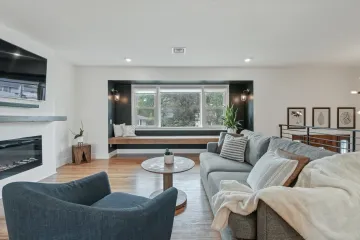
For a St. Johns County family wanting to update their living room with new furniture, window treatments, and a fresh color palette—but keeping the existing layout—a decorator provides the expertise needed at a fraction of designer costs.
When Should You Hire Each Professional?
Start with a simple assessment: Does your project involve structural changes, require permits, or only need aesthetic updates?
The answer determines which professional you need.
Scenarios Requiring an Interior Designer
Hire a designer when your project includes:
- Moving or removing walls (even non-load-bearing walls require permits in St. Johns County)
- Changing room layouts or spatial configurations
- Adding or relocating electrical outlets, switches, or lighting fixtures
- Moving plumbing fixtures or adding new water lines
- Ensuring ADA compliance for commercial spaces or accessibility modifications
- Coordinating with architects, engineers, or contractors
- Obtaining building permits (required for work involving electrical, gas, mechanical, or plumbing systems)
St. Johns County enforces strict permitting requirements. Any project involving electrical, plumbing, or structural changes requires permits.
Projects exceeding $5,000 in direct contract costs require a recorded Notice of Commencement before the first inspection.
Scenarios Perfect for an Interior Decorator
A decorator is the right choice when you need:
- Aesthetic refreshes without structural modifications
- New furniture selection for your existing layout
- Updated color schemes and paint selection
- Styling for photography, events, or home sales
- Textile and accessory coordination
- Window treatment design and installation
If your walls, electrical, and plumbing stay put, a decorator likely meets your needs at a more accessible price point.
The Hybrid Approach
Some professionals offer both design and decorating services under one roof. Field Flower Collective in St. Johns County provides this comprehensive approach, combining fashion industry expertise with full-service interior design capabilities. Their team handles everything from construction project management to final styling.
This hybrid approach delivers several advantages:
- Streamlined communication with a single point of contact
- Unified vision from structure to styling
- Ability to plan decorative elements during the construction phase
- Time and cost efficiency throughout the project
Cost-Benefit Considerations
Investing in a designer's higher fees ($100-$350+/hour) pays off for major renovations and structural work. The technical expertise, code compliance assurance, and project management prevent costly mistakes that can exceed the designer's fees many times over.
Decorator services ($50-$150/hour) provide better value for aesthetic updates and furniture selection. When no permits are required and the structure remains unchanged, decorators deliver professional results at lower rates.
Real-World Example: Comprehensive Design in St. Johns County
Consider a St. Johns County family planning a kitchen renovation that removes a wall to create an open-concept layout, plus a whole-home furniture and decor refresh. This project requires both technical design expertise and aesthetic vision.
Field Flower Collective's comprehensive approach addresses both needs. Margo and Nery's fashion industry background—including textile expertise from sourcing fabrics globally and sophisticated color sensibility from creating cohesive collections—combines with their interior design training.
They manage construction coordination with contractors for the wall removal and kitchen remodel while simultaneously planning the furniture selections, color palettes, and decorative elements for the entire home.
The benefits of this integrated approach include:
- The kitchen's new openness flows naturally into adjacent spaces because furniture placement and color schemes were planned during construction
- One team manages both contractor coordination and aesthetic decisions
- Decorative elements arrive when construction completes, eliminating gaps between renovation and move-in
- Avoids the cost of hiring separate professionals or explaining your vision multiple times
Contact Field Flower Collective at design@fieldflowercollective.com or (917) 692-4525 to schedule your consultation.
Frequently Asked Questions
What's the average cost for an interior decorator?
Interior decorators typically charge $50-$150 per hour or flat project fees of $500-$5,000 depending on scope. Many also charge 25-30% markup on furniture and accessories they source.
Do I need an interior designer or decorator?
Hire a designer if your project involves structural changes, permits, or technical planning for electrical, plumbing, or code compliance. Hire a decorator if you only need aesthetic updates like furniture selection, color consultation, or styling.
What is the rule of three in decorating?
The Rule of Three states that objects arranged in odd numbers (especially three) create more visual appeal and memorability than even-numbered groupings. Decorators apply this principle to accessory arrangements, artwork groupings, and furniture placement to achieve balanced, dynamic compositions.
Can one professional do both interior design and decorating?
Yes, many interior designers offer decorating services as part of their comprehensive practice. This provides clients with both technical expertise for structural work and aesthetic vision for finishing touches within one professional relationship.
What credentials should I look for when hiring a design professional?
For designers, verify formal education, NCIDQ certification, and state licensure if your project involves commercial work or construction documents. For decorators, review portfolio quality, client testimonials, and demonstrated experience in your preferred style.
How long does each type of project typically take?
Decorator projects typically take 2-8 weeks from consultation to final installation, depending on furniture lead times and project scope. Designer projects involving renovation range from 3-12+ months depending on complexity, with planning phases averaging 9.6 months and construction adding 5.1 months for kitchen projects.